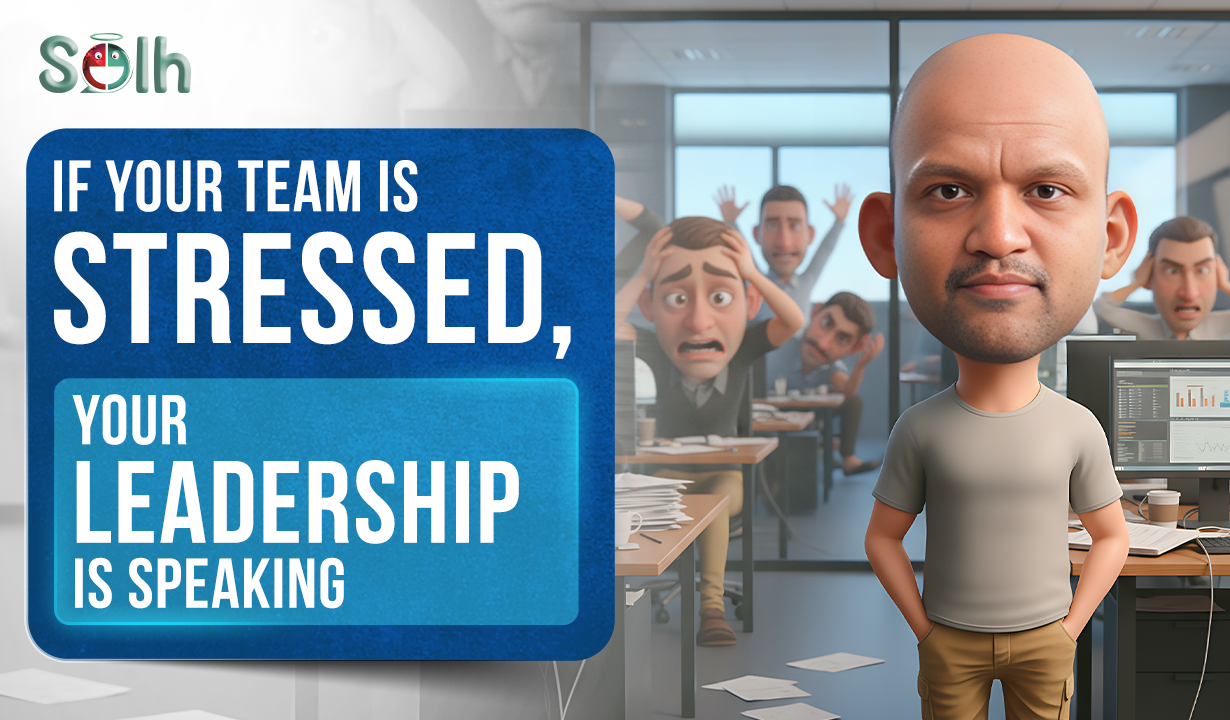


Everyone today is talking about workplace culture. Every HR deck, every leadership conference, and every LinkedIn post screams the same slogans: “Culture eats strategy for breakfast” or “We are building a people-first culture.”
But here’s the problem—culture has become a buzzword, a slide in the presentation, a checkbox in the employee handbook. Organizations treat culture as if it’s some skill that can be coached in a weekend workshop. It isn’t.
Culture is not a coaching session. Culture is what you live, breathe, and practice—every single day. And when it’s ignored or faked, it quietly turns into a toxic workplace culture.
Culture is the Invisible Contract
You can’t define culture in a mission statement and expect employees to “adopt it.” Organizational culture is not a paragraph framed on the wall; it’s the unspoken contract that governs how people behave when no one is watching.
Think about it—if leadership says “We value transparency” but managers hide information, that’s not transparency, that’s hypocrisy. And hypocrisy is the fastest way to kill trust.
Organizational behavior is shaped not by policies, but by daily actions. If employees see leaders cutting corners, they will cut corners. If employees see leaders treating people with dignity, they will treat others with dignity.
Culture is contagious, but so is a toxic workplace culture.
Leadership is Culture
Here’s the blunt truth: leaders don’t build culture through words, they build it through example.
You can’t coach kindness. You can’t coach integrity. You can’t coach respect. Either you live it or you don’t.
The most powerful leadership training is not a seminar—it’s the daily leadership behavior of the CEO, the manager, and the team lead. When leaders:
- Take accountability instead of blaming others,
- Admit when they are wrong,
- Show up consistently,
- Respect deadlines and people’s time,
When they don’t, they create the conditions for toxic leadership—and culture collapses from the top down.
Coaching Culture vs. Living Culture
Here’s where companies go wrong: they try to “install” culture like software. They hire consultants, run workshops, and hand out glossy playbooks. Employees nod, smile, and then go back to business as usual.
Because culture can’t be installed. It has to be absorbed.
If you want a people-first culture, don’t design a fancy poster—treat your people like human beings. If you want collaboration, break down silos. Culture lives in everyday decisions, informal conversations, and unspoken workplace norms.
Ignore this, and even the most well-funded organizations drift into a toxic workplace culture without realizing it.
The Lie of “Perks = Culture”
Let me break another myth: free snacks, bean bags, ping pong tables, and Friday beers do not equal culture. Those are perks. And perks are cheap band-aids for deeper problems.
I’ve seen organizations brag about wellness programs while employees quietly burn out under unrealistic deadlines. That’s not wellness; that’s deception.
True culture is not about perks. It’s about principles.
- Do employees feel safe to speak up?
- Are mistakes treated as learning opportunities or as punishable offenses?
- Does leadership listen, or do they only pretend to listen?
When the gap between words and actions grows, toxic workplace culture becomes the default reality.
Authenticity at Work
Employees are tired of slogans. They crave authenticity.
If your company claims innovation but punishes experimentation, you don’t have innovation—you have stagnation. If inclusion exists only in slides but not in leadership rooms, you don’t have inclusion—you have optics.
People don’t leave jobs. They leave environments that feel dishonest, unsafe, and emotionally draining. They leave a toxic workplace culture that refuses to change.
Culture is a Living Thing
Think of Workplace Culture as a living organism, one that leaders increasingly need stress detection technology to understand and protect.
Neglect it, and it decays. Fake it, and it mutates into cynicism. Nurture it consistently, and it becomes your strongest advantage.
Because here’s the truth no consultant will tell you:
Your people don’t care what you say about culture. They care what you do.
How to Actually Build Culture (Without the Fluff)
Let me be practical. If you’re serious about Workplace Culture, stop coaching it and start living it. Here’s where you begin:
- Walk the talk – If you want accountability, show accountability.
- Reward what you preach – If collaboration is your value, stop promoting lone wolves.
- Be transparent – If you don’t know the answer, say it. Employees prefer truth over corporate jargon.
- Listen actively – Don’t just host townhalls. Act on what people say.
- Check your power – Culture collapses when leaders believe rules don’t apply to them.
These are not coaching tips. These are daily disciplines.
Final Shot of Truth
Culture is not an HR initiative. It’s not a slide deck. It’s not a coaching program.
Culture is lived reality.
You cannot outsource it. You cannot fake it. And you cannot coach your way out of a toxic workplace culture.
If you’re a leader reading this, stop asking how to “teach” culture. Start asking how you are living it—every single day.
Because culture isn’t taught.
Culture is lived.
FAQs
1. What creates a toxic workplace culture?
A toxic workplace culture forms when there is a gap between what leaders say and how they behave. When values are preached but not practiced, trust erodes and everyday actions normalize dysfunction.
2. Why do perks fail to fix workplace culture problems?
Perks address comfort, not culture. When deeper issues like unrealistic expectations, silence, or blame exist, perks only mask problems rather than resolve them.
3. How can leaders prevent toxic leadership from taking root?
Toxic leadership is prevented when leaders hold themselves to the same standards as everyone else, admit mistakes, and respect boundaries. Culture collapses when leaders believe rules don’t apply to them.
4. Why do employees leave because of organizational behavior, not jobs?
Employees leave when daily organizational behavior contradicts stated values. When authenticity is missing, engagement drops and trust disappears, pushing people to walk away.
5. How can organizations start fixing a toxic workplace culture?
Organizations must stop trying to coach culture and start living it. Real change begins with leaders modeling the behavior they expect and reinforcing it through everyday decisions.