
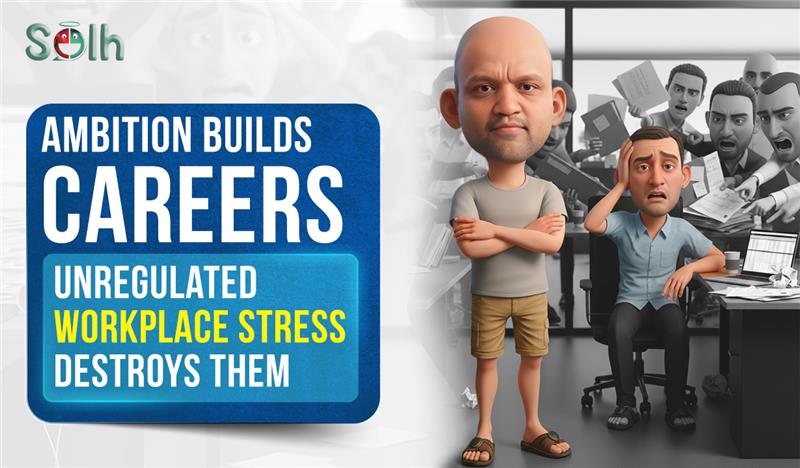
Ambition does not cause burnout.
Unregulated work related stress does.
As pressure becomes constant, not occasional, organisations must move beyond motivation and adopt structured workplace stress management systems. This blog explains why stress at work quietly erodes performance and how ecosystems like Solh Wellness help organisations regulate pressure before ambition turns into burnout.
The Misdiagnosis: When Ambition Took the Blame
Burnout became fashionable.
Ambition became suspicious.
Suddenly, wanting more was seen as dangerous.
That diagnosis is wrong.
Ambition builds companies.
It sharpens focus.
It creates momentum.
What breaks people is not ambition.
It’s stress without regulation — work based stress that accumulates silently inside high-pressure roles.
When ambition runs on unmanaged pressure, it stops being fuel and starts becoming friction.
What Workplace Stress Really Looks Like Today
Modern workplace stress doesn’t scream.
It whispers.
It looks like:
- constant urgency
- shallow focus
- emotional flatness
- sleep disruption
- irritability normalised as “work pressure”
- disengagement masked as professionalism
This is job related stress becoming chronic.
And chronic stress doesn’t motivate.
It slowly reduces capacity.
Why Work Related Stress Escalates Before Anyone Notices
Stress rarely announces itself.
It accumulates quietly:
- recovery is skipped
- thinking slows
- patience thins
- silence increases
As this continues, stress hormones remain elevated, keeping the nervous system in a prolonged state of activation.
By the time burnout becomes visible, the nervous system has already been overloaded for months.
This is why managing workplace stress after breakdown is ineffective.
Stress must be addressed before behaviour changes.
Why Motivation and Culture Talks Don’t Work
Here’s the uncomfortable truth:
You cannot motivate a stressed nervous system into calm.
You cannot inspire recovery through speeches.
You cannot fix exhaustion with values decks.
Most work stress causes are structural, not motivational.
Effective workplace stress management requires:
- early detection
- daily regulation
- structure
- leadership accountability
Most stress management strategies fail because they address mindset, not load.
The Leadership Blind Spot
Many leaders believe:
“My team is ambitious. They can handle pressure.”
Maybe they can.
But for how long?
Ambition without regulation leads to:
- burnout
- errors
- trust erosion
- attrition
These are not personal failures.
They are predictable outcomes of unmanaged causes of stress in the workplace.
This is how organisational mental health collapses quietly.
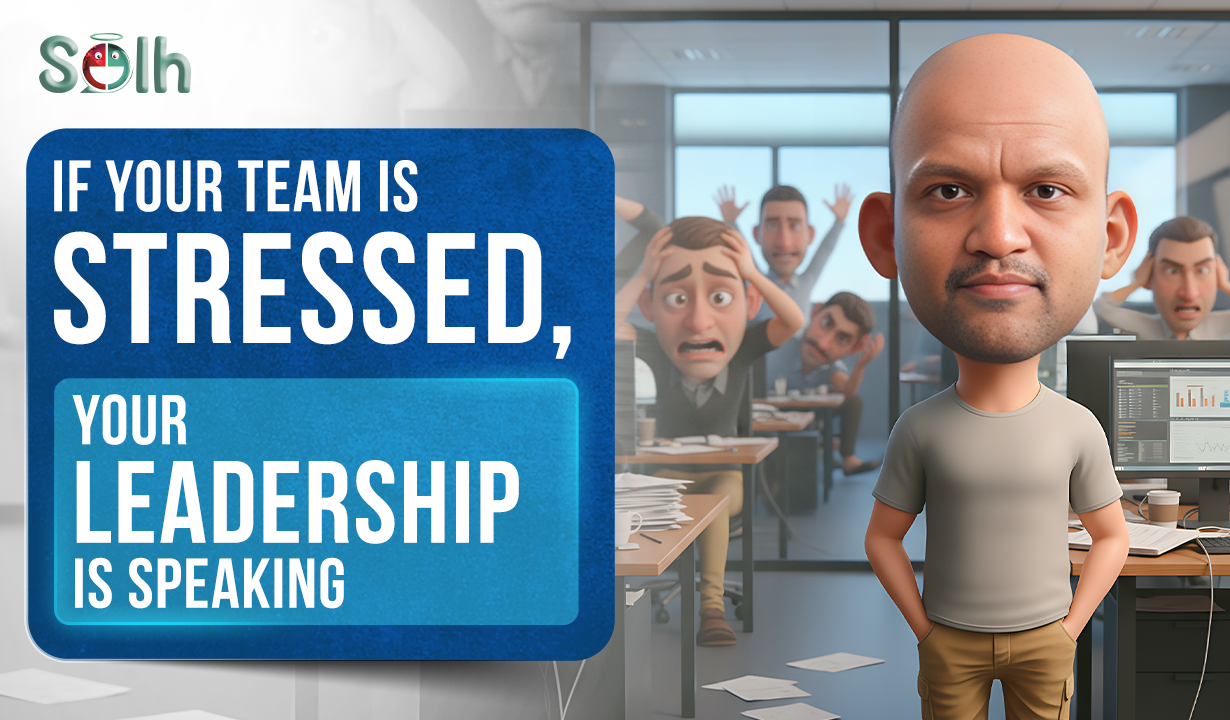
Leadership doesn’t just drive outcomes.
It sets the pressure climate.
What Real Workplace Stress Management Requires
Real workplace stress management is not glamorous.
It requires:
- stress visibility
- consistent regulation tools
- structured stress management for employees
- organisational insight into stress trends
In short: systems, not slogans.
This is the shift from individual coping to organisational stress management — including time and stress management that fits real work rhythms.
Where Solh Wellness Becomes Essential
Solh Wellness exists because organisations reached a limit.
They realised:
- guessing stress doesn’t work
- empathy without structure collapses
- intention without data is just hope
Solh is not a perk.
It is stress infrastructure.
Streffie: Making Stress Visible
Streffie is a stress monitoring tool that measures stress objectively using facial biomarker analysis.
No surveys.
No self-reporting bias.
This is the first step in managing workplace stress:
making it visible before it becomes behavioural.
Solh App: Daily Stress Awareness
The Solh App works as a personalised stress management app, helping employees understand how work related stress affects them daily.
It builds:
- stress literacy
- emotional regulation
- daily recovery habits
This is stress management for employees that fits real work life.
Guided Plans: Structure Over Motivation
Solh’s Guided Plans (7–14–21 days) translate stress management strategies into daily action.
Not advice.
Not theory.
Structure.
This is how ambition stays sustainable.
Solh Buddy: Continuous Support
Solh Buddy is a human-supervised AI companion that supports employees during everyday stress moments.
This is AI stress management used responsibly — to support, not surveil.
Stress is addressed early, not after collapse.
Smart AI Dashboard: Accountability for Leaders
Solh’s Smart AI Dashboard aggregates stress data ethically and anonymously.
It gives leadership visibility into:
- stress trends
- burnout risk
- organisational pressure cycles
This transforms Solh into a true corporate stress management software — not to control people, but to correct systems.
Why Ambitious Teams Need Calm Systems
Ambitious people don’t need less drive.
They need regulated environments.
When stress is managed:
- ambition becomes sustainable
- performance stabilises
- creativity returns
- people stay longer
This is real workplace mental wellness.
Not softness.
Not slowdown.
But intelligent pressure management.
The Core Insight
Ambition isn’t the enemy.
It builds companies.
It creates progress.
It sharpens performance.
But unregulated work related stress turns ambition into a liability.
People don’t burn out because they want more.
They burn out because no one helped them regulate the pressure of wanting more.
FAQ
Q1. Is ambition the cause of burnout at work?
No. Burnout is caused by prolonged, unmanaged work related stress — not ambition.
Q2. What is workplace stress management?
It is the structured process of identifying, regulating, and reducing stress at work using systems, tools, and leadership accountability.
Q3. Why is managing workplace stress critical for organisations?
Because chronic work related stress leads to burnout, disengagement, errors, and attrition.
Q4. How does Solh Wellness help manage workplace stress?
Solh provides an end-to-end ecosystem — stress measurement, daily regulation tools, guided plans, AI support, and leadership dashboards.
Q5. Can technology really help reduce stress at work?
Yes, when used ethically. Stress monitoring tools and AI stress management platforms help detect patterns early and enable timely intervention.