
Navratri. Nine nights of devotion. Of dance. Of worship. Of goddess Durga slaying the demons that plagued the world.
But let’s be real—your demons aren’t in old scriptures. They don’t wear crowns or wield maces. They live in your head, in your habits, in your phone. They’re Demons of Modern Life disguised as modern life stress, anxiety, addiction, toxic people, and endless scrolling.
You don’t need a lion. You don’t need a trident. What you need is clarity, awareness, and the guts to admit: Yes, I am fighting demons every single day in this stress navratri of modern living.
The question is—are you even fighting, or have you already surrendered to everyday stressors?
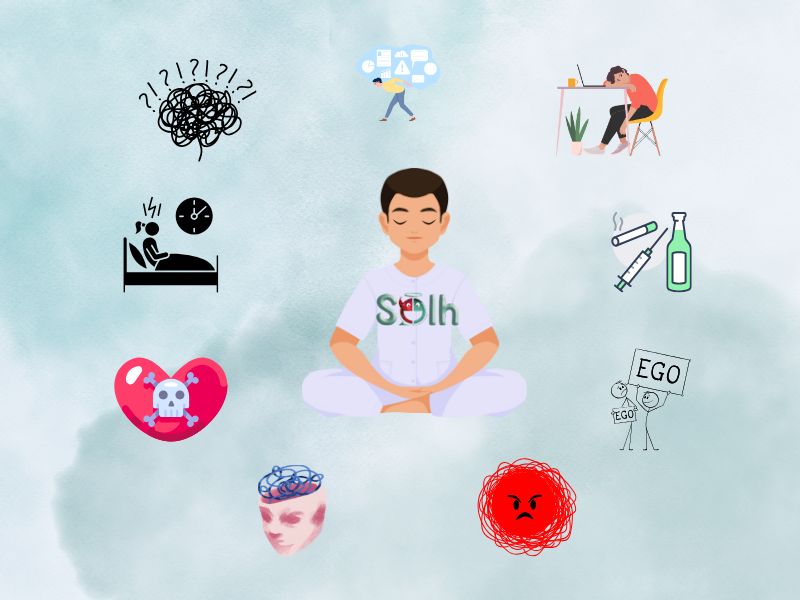
Here are the 9 demons of modern life, mapped to Navratri. And if you’re serious about slaying them, you’ll also need a weapon. That’s where Solh comes in—not as a god, not as a guru, but as your support system .
1. Ravan 2.0: Overthinking
Ravan had ten heads. You’ve got one—but it never shuts up. You replay conversations, obsess over mistakes, and create imaginary disasters that will never happen.
Overthinking is not intelligence—it’s self-inflicted torture and a major contributor to mental health awareness conversations today.
And here’s the kicker: overthinking doesn’t prepare you, it paralyzes you.
Your weapon? Solh gives you AI stress management tools like guided plans, buddy support, and reflections—that help you untangle the mess in your head. Not by giving fake “positivity,” but by showing you how to slow down the noise and face your thoughts head-on.
2. Kumbhkaran: Sleep Deprivation
Mythology’s Kumbhkaran slept for six months. You, on the other hand, can’t sleep for six hours. Why? Because Netflix, Instagram, and your “late-night productivity” lies keep you wired at 3 AM.
This sleep deprivation stress quietly damages your focus, mood, and emotional balance.
Your weapon? Solh’s sleep tools—nervous system resets, guided meditations, and habit nudges—help you actually rest Because without sleep, you’re not fighting demons. You are the demon.
3. Shurpanakha: Toxic Relationships
You lose your self-respect every time you stay in toxic relationships—manipulative bosses, energy-draining friendships.
These relationships silently increase stress in daily life.
Your weapon? Solh gives you the awareness, the community, and the support to finally say: Enough.
4. Mahishasur: Work Burnout
Half man, half beast. In 2025? Half Zoom call, half zombie.
This is textbook work burnout, glorified as hustle culture.
Your weapon? Solh’s guided stress plans help you manage workplace stress without destroying your health.
5. Putna: Addiction
Putna fed poisoned milk to Krishna. Your Putna feeds you with “just one drink,” “just one puff,” “just one game,” “just one pill.” Same poison, just better branding.
This is where addiction and stress collide—each feeding the other silently.
Your weapon? Solh - stress management and de-addiction platform offers a safe, stigma-free space to confront addiction—whether it’s alcohol, nicotine, porn, gambling, or digital. With support groups, reflections, and professional guidance, you don’t just fight Putna. You cut her supply chain.
6. Duryodhan: Ego
Duryodhan’s pride destroyed kingdoms. Your pride destroys your relationships. You’d rather ruin everything than say, “I was wrong.”
Ego convinces you it’s protection, but it slowly damages your emotional connections and increases emotional burnout.
Your weapon? Solh’s journaling tools and self-reflections give you the mirror you’ve been avoiding. Because sometimes, killing ego means facing the truth: you’re not always right. And that’s okay.
7. Tarakasur: Digital Overload
In mythology, Kartikeya killed him with a spear. Today, your spear is a logout button you’re too scared to press. Instagram, Twitter, Netflix, endless reels—you call it relaxation, but it’s erosion
The demon doesn’t drain you in hours—it steals you in minutes.
It fuels screen addiction while pretending to be relaxation.
Your weapon? Solh helps you track digital burnout, set healthier boundaries, and replace endless scrolling with activities that actually recharge you. Because your life isn’t supposed to be a reel.
8. Bhasmasur: Anger & Impulse
Bhasmasur destroyed himself with his own hand. You do the same with your temper. Every impulsive message, every outburst, every slammed door—you’re burning your own house while thinking you’re scaring the other person.
Unchecked anger becomes one of the most dangerous everyday stressors.
Your weapon? Solh’s guided nervous system practices and stress maps help you recognize the triggers before you explode. Because strength isn’t in shouting. It’s in choosing not to.
9. Kali (Not the Goddess, the Demon): Anxiety & Fear
The most invisible demon. Anxiety doesn’t kill you in a battle—it keeps you half-alive every day. Fear whispers in your ear: What if? What if? What if?
This demon feeds on anxiety and fear, keeping you stuck in constant “what if” loops.
Your weapon? Solh’s community, buddy system, and personalized stress maps don’t erase anxiety—but they help you manage it. You learn to breathe through it, instead of letting it own you.
Solh: Your Modern Weapon of Navratri
Navratri isn’t just about dancing with sticks. It’s about dancing with awareness—circling the light, beating down the dark.
But here’s the thing: if you’re not fighting your own nine demons, the dandiya is just cardio.
This Navratri, use Solh as your weapon. Not for nine nights, but for life. To track, confront, and dismantle the stressors and addictions that drain you. To connect with others who are fighting the same battles. To finally stop pretending and start slaying.
Nine days. Nine demons. One battlefield: your mind.
And one ally: Solh.
Truth Shot by Kapil: Don’t worship the goddess for slaying demons if you’re too scared to face your own. Solh gives you the tools. The question is—will you use them, or keep dancing around your stress pretending it’s not there?
FAQ’s
Q1. What does “Stress Navratri” mean?
Stress Navratri is a modern metaphor that maps the nine traditional demons of Navratri to everyday stressors like overthinking, burnout, addiction, anxiety, and digital overload that people fight daily.
Q2. How is stress connected to overthinking and anxiety?
Stress keeps the nervous system in a constant alert state. When stress remains unresolved, it manifests as overthinking, racing thoughts, anxiety, and fear-based decision-making.
Q3. Why does lack of sleep increase stress so much?
Sleep deprivation prevents the brain from resetting. Without proper rest, stress hormones remain elevated, making emotional regulation, focus, and decision-making worse.
Q4. Can toxic relationships really increase stress levels?
Yes. Toxic relationships create chronic emotional stress, which directly affects self-worth, confidence, and mental health, often leading to burnout or unhealthy coping behaviors.
Q5. Is work burnout actually a form of chronic stress?
Absolutely. Burnout is not sudden exhaustion—it is the result of long-term unmanaged stress, unrealistic expectations, and constant performance pressure.
Q6. Why is addiction described as a “stress demon”?
Addiction feeds on stress. Substances and behaviors provide temporary relief but increase stress long-term, creating a cycle of dependence and loss of control.
Q7. How does digital overload contribute to stress?
Constant notifications, screen exposure, and endless scrolling overload the brain, disrupt sleep, reduce focus, and silently raise baseline stress levels.